
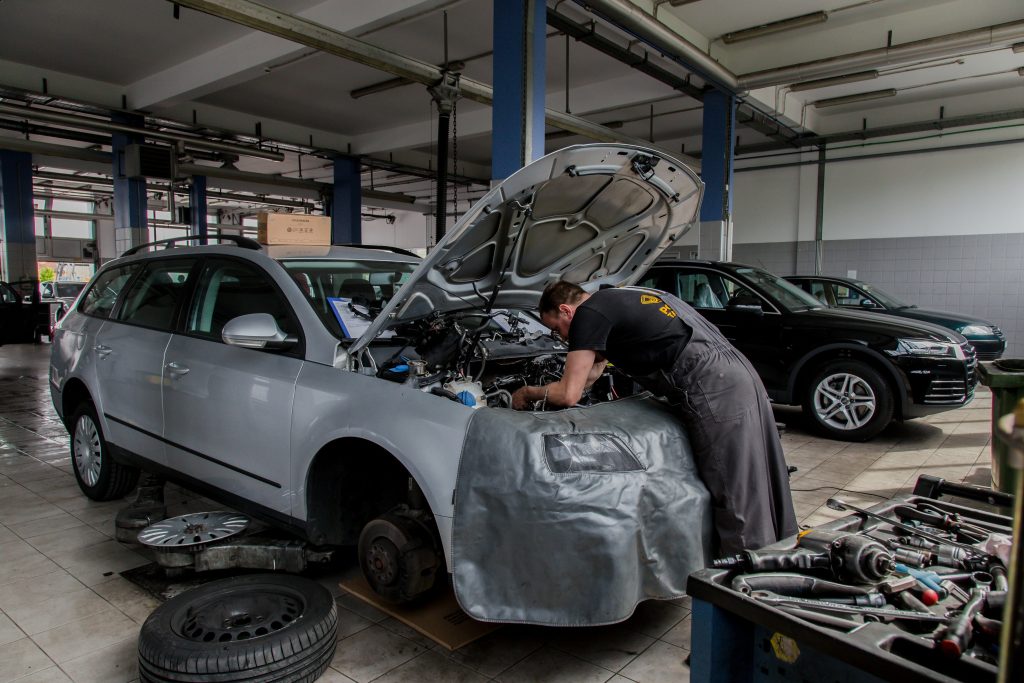
San Jose runs on engines — not just the ones under the hoods of the cars filling the 101, the 880, and the 237 every morning, but the innovation engines driving the companies that line North First Street, Tasman Drive, and the corridors of Silicon Valley. In a city where time is treated as the scarcest resource and productivity is practically a cultural value, sitting in stop-and-go traffic for an hour each way is already an accepted cost of doing business here.
What nobody budgets for is a car that breaks down in that traffic.
San Jose’s commuting pattern — long daily distances, sustained stop-and-go idling, the Bay Area’s warm and dry summers followed by cool and occasionally wet winters, and roads full of vehicles that are driven hard by people who simply don’t have time for a shop visit — creates a very specific set of engine problems that surface repeatedly for drivers across the South Bay. Understanding what those problems are, why they develop in San Jose’s driving conditions specifically, and how to catch them early is the difference between a $150 maintenance call and a $2,000 roadside emergency.
Here’s the breakdown — and how Mobile Mechanic of San Jose handles every one of these at your location, without interrupting your workday.
1. Misfiring Engines and Ignition System Failures
Engine misfires are one of the most commonly reported complaints among San Jose drivers, and the connection to local traffic conditions is direct. A misfire occurs when one or more cylinders fails to complete proper combustion — the spark plug doesn’t fire at the right time, the fuel-air mixture is off, or a failing ignition coil delivers insufficient voltage to ignite the charge.
In steady highway driving, minor ignition wear often goes unnoticed. In San Jose’s stop-and-go commute pattern — where engines repeatedly cycle between idle at stoplights and partial load in traffic — weak ignition components that might hold together under consistent load reveal themselves quickly. Spark plugs accumulating carbon deposits from repeated cold, incomplete combustion cycles in urban traffic develop misfires that become progressively more pronounced. Ignition coils weakened by Silicon Valley’s summer heat fail intermittently under low-speed load in a way they wouldn’t at highway cruise.
The tell-tale symptoms are a rough idle at stoplights on the 880, hesitation when pulling away from a stop on Brokaw Road or North First Street, a check engine light accompanied by a flashing or steady glow, reduced fuel economy across your weekly commute, and occasionally a faint smell of unburned fuel from the exhaust.
Left unresolved, a misfiring cylinder sends raw fuel into your exhaust system, which destroys catalytic converters — one of the most expensive components on any modern California-spec vehicle, where emissions equipment is mandated to a higher standard than most states.
Our car tune-up service in San Jose addresses every ignition system component responsible for reliable combustion — spark plugs, ignition coils, ignition wires, distributor cap and rotor on older vehicles, air filter, and fuel delivery components — all inspected and serviced at your home or office in San Jose. If your engine has been running rough during your Silicon Valley commute, a tune-up is almost always the most cost-effective first step.
2. Check Engine Light — The Most Ignored Warning in San Jose
No dashboard signal is more universally ignored by Bay Area drivers than the check engine light. In a city full of analytically minded, data-driven professionals, there is an irony in how many of them choose to drive indefinitely with an amber warning light glowing on their dashboard rather than take ten minutes to find out what it means.
The practical reason is understandable: nobody wants to arrange a shop visit, take time off work, or sit in a waiting room in Santa Clara for two hours over a light that might mean nothing. But the light never means nothing — it means the vehicle’s onboard computer has detected a sensor reading outside normal parameters, logged a fault code, and is waiting for someone to retrieve it.
In San Jose’s traffic conditions, the range of fault codes that trigger the check engine light is wide. Common causes our technicians encounter include misfires from the ignition system issues described above, oxygen sensor failures from the sustained low-speed, high-idle driving that characterizes South Bay commuting, mass air flow sensor contamination from Bay Area air quality and stop-and-go idling, evaporative emissions system faults from California’s strict EVAP requirements, EGR valve issues that worsen with the sustained low-load operation of urban traffic, and catalytic converter degradation in higher-mileage Bay Area vehicles.
The critical point is that some of these codes represent simple, inexpensive fixes. Others, left unaddressed, cascade into far more expensive consequences. You cannot tell which category you’re in without a diagnostic scan.
Our car diagnostics service in San Jose uses professional OBD scanning equipment at your location to read every fault code, explain exactly what each one means, and give you a clear, prioritized picture of what needs attention and what can wait. For San Jose drivers, it’s the single most actionable service when something feels off — and our blog post Why Is My Check Engine Light On? covers every common trigger in detail, worth reading before your next service call if you want to understand exactly what your car is telling you.
3. Engine Overheating From Bay Area Stop-and-Go Traffic
The cooling system engineering trade-off in most vehicles is calibrated for a mix of urban and highway driving. At highway speeds, a constant stream of fresh air flows through the radiator and provides significant passive cooling. In stop-and-go traffic on the 101 through downtown San Jose or the interchange where the 880 meets the 237, that airflow disappears entirely — and your cooling system has to manage all engine heat through the radiator fan alone, repeatedly, for extended periods.
This sustained thermal stress reveals cooling system weaknesses that might never present on a vehicle driven primarily at highway speeds. A thermostat that’s beginning to stick closed will cause overheating in the first 20 minutes of a bad traffic day. A water pump with slight impeller wear that circulates coolant adequately at speed may be insufficient when idling through a Guadalupe Parkway backup. A radiator with partial mineral clogging from years of Bay Area hard water will manage summer cruising but fail at sustained idle load.
San Jose’s summer heat compounds the risk. July through September, with temperatures in San Jose’s inland areas regularly climbing into the mid-90s and above, places the cooling system under maximum thermal demand precisely when traffic is worst. The dual stress of peak ambient temperature and sustained no-airflow idling is when overheating events cluster.
Our radiator repair service in San Jose covers every cooling system component — coolant condition and concentration, thermostat function, hose integrity, water pump health, and radiator flush if needed — all diagnosed and resolved at your location. If your temperature gauge has crept higher than normal during a traffic-heavy commute, or if you’ve noticed any coolant loss, this is not a situation to monitor and hope improves.
4. Oil Degradation From Urban Drive Cycles
Here’s an engine problem that develops invisibly until its consequences become visible: oil that’s broken down well before the mileage on the windshield sticker suggests it should.
San Jose’s commuting pattern is hard on motor oil in specific ways. Repeated short trips where the engine doesn’t fully reach operating temperature — a common pattern in dense urban traffic — allow moisture and combustion byproducts to accumulate in the oil without burning off. Extended idle time in traffic generates heat without the purging effect of sustained higher-RPM highway operation. And California’s smog-check requirements mean many San Jose vehicles are running tight emissions tolerances that are more sensitive to oil quality than vehicles in less regulated states.
The result is oil that’s functionally degraded well before 5,000 or 7,500 miles — contaminated with combustion acids, moisture, and fine particulate from repeated urban cycle operation. That contaminated oil circulates through your engine’s precision tolerances with every start, creating cumulative abrasive wear that doesn’t produce a warning light and doesn’t announce itself until a more significant engine symptom develops.
For San Jose commuters putting significant daily miles on their vehicles in primarily urban conditions, shortening oil change intervals by 20 to 30 percent from the manufacturer’s sticker recommendation is a genuine investment in engine longevity that pays back many times over the cost of an extra oil change per year.
Our oil change service in San Jose uses the correct viscosity specification for your vehicle, comes to your home or office, and handles disposal — no shop trip, no line, no time lost from your workday. In a city where everyone’s schedule is already full, removing the friction from oil changes means they actually happen on schedule.
5. Fuel Pump Failure From Low-Tank Urban Driving Habits
San Jose drivers have a specific fuel pump risk factor that’s worth understanding: the combination of high gas prices and the convenience of credit card pay-at-pump refueling creates a behavioral pattern where many Bay Area drivers run their fuel tanks consistently low — filling up frequently in small amounts rather than keeping the tank above the halfway mark.
The engineering problem with this habit is that the fuel pump in most modern vehicles is mounted inside the fuel tank and relies on surrounding gasoline to cool and lubricate itself during operation. Running consistently below a quarter-tank means the pump is regularly operating in reduced fuel with less cooling capacity — and in Silicon Valley’s summer heat, under-hood temperatures elevate this stress further.
Over time, this pattern accelerates pump wear and the accumulation of tank sediment around the pump inlet. The early symptoms are subtle and easy to attribute to other causes: a slight hesitation when pulling onto Lawrence Expressway from a side street, an engine that takes a beat longer to catch on a warm afternoon start, an intermittent stumble under load during freeway acceleration. These symptoms progress — sometimes over months, sometimes over a few weeks of hot-weather driving — until the pump can no longer maintain adequate pressure and the engine stalls in traffic.
Our fuel pump repair service in San Jose diagnoses fuel delivery problems on-site, checking pump pressure output, fuel filter condition, pressure regulator function, and injector performance — and handles replacement at your location without a tow to a shop. Catching a weakening fuel pump before it strands you on the 880 during morning rush hour is significantly less disruptive than dealing with one after.
6. Belt Failure Accelerated by Bay Area Temperature Cycling
The San Jose and broader South Bay climate has a specific rubber-aging characteristic that’s more pronounced than in either purely hot or purely cold climates: dramatic daily and seasonal temperature swings that cause rubber components to expand and contract repeatedly through a wide thermal range.
Summer afternoons in San Jose’s inland areas push into the mid-90s. The same vehicle that sat in hot sun in a North San Jose tech campus parking lot all day drives home through cool evening Bay breeze toward the hills of Willow Glen or Almaden Valley. Winter mornings in the South Bay dip into the 30s and 40s before warming dramatically by afternoon. This thermal cycling is relentless on serpentine belts and timing belt compounds, causing micro-cracking and hardening that develops faster than in more moderate or more uniformly hot climates.
A serpentine belt that’s approaching the 60,000-mile mark in Bay Area conditions deserves inspection rather than the assumption it has another full service interval remaining. The failure mode is rarely gradual — belts that appear acceptable on visual inspection can fail under load with little warning, killing the alternator, AC compressor, and water pump simultaneously. For tech workers driving to Cisco, Broadcom, or Samsung campuses in North San Jose, a stranded vehicle in a corporate parking lot with a snapped belt is an entirely avoidable bad day.
Our belt replacement service in San Jose inspects serpentine belts, timing belts, tensioners, and idler pulleys for both visible cracking and internal glazing — replacing what’s needed at your location before Bay Area temperature cycling finishes the job at an inconvenient moment.
7. Transmission Stress From Silicon Valley Commute Patterns
San Jose’s commuting distances are long by most city standards. Many South Bay tech workers are driving 30, 40, or 50 miles each way — a combination of urban surface streets, freeway on-ramp stop-and-go, sustained highway segments, and more stop-and-go at the destination end. This varied, high-mileage daily cycle accumulates transmission wear at a rate that makes Bay Area vehicles age faster in drivetrain terms than vehicles with equivalent odometer readings in lighter-use markets.
Transmission fluid that’s past its service life — or that has absorbed moisture from Bay Area humidity over years of operation — loses its protective properties under the heat generated by sustained daily high-mileage driving. The early symptoms are often subtle: a slight roughness in gear engagement under traffic conditions, a momentary hesitation between shifts during the morning 237 crawl, a faint shudder when the transmission locks the torque converter at freeway speed. These are early warnings that the transmission is operating under stress and that a fluid service or closer inspection is warranted.
Our clutch and transmission service in San Jose diagnoses drivetrain issues at your location — whether it’s a fluid service, a clutch hydraulic adjustment, or a more involved repair — giving Silicon Valley commuters a path to resolving transmission problems before they escalate into a much more expensive fix.
8. AC System Failure During South Bay Summer Commutes
Bay Area summers have a temperature profile that catches some newcomers off guard: while coastal San Francisco stays cool and foggy, San Jose and the South Bay regularly see summer temperatures in the low-to-mid 90s from June through September, with September often being the hottest month of the year. A vehicle interior parked on an exposed tech campus parking lot in 95°F heat can reach temperatures that make it genuinely dangerous to enter without air conditioning.
AC compressors that accumulated wear through the previous summer’s sustained operation often fail in the first weeks of the new summer season — when demand returns suddenly after a cooler spring. Refrigerant leaks that develop slowly over winter become apparent on the first truly hot commute of the year. A clogged condenser from spring pollen accumulation reduces cooling efficiency noticeably when the system is working at maximum capacity.
For San Jose tech workers who commute in their vehicles, a non-functional AC in South Bay summer conditions is not a minor inconvenience — it’s a productivity and comfort issue that affects the quality of your workday before it even starts.
Our AC repair and recharge service in San Jose diagnoses and resolves AC failures at your home or office parking lot — leak detection, component repair, and refrigerant recharge all handled on-site. Getting your system inspected in spring, before the South Bay’s hottest months, means you’re never discovering a failed compressor on the first 95°F commute of the year.
9. Brake Wear From Heavy Bay Area Traffic
San Jose’s combination of long daily commutes, freeway stop-and-go, and the surface street congestion through downtown, Willow Glen, and the Almaden Valley corridors creates elevated brake wear that national maintenance interval averages don’t fully account for. Pads and rotors that might last 40,000 miles on a vehicle driven primarily at highway speed may need service at 25,000 to 30,000 miles on a South Bay commuter vehicle.
The warning signs are consistent across all driving environments — squealing, grinding, a soft pedal, or a pull to one side — but in San Jose’s traffic they arrive sooner than most drivers expect. Catching them at the squeal stage keeps pad replacement a straightforward service. Waiting until grinding means rotors are involved and the cost is higher.
Our brake service in San Jose covers a full four-corner inspection — pad thickness, rotor condition and runout, caliper function, and brake fluid quality — at your location. For Silicon Valley commuters putting serious daily mileage on their vehicles, an annual brake inspection is maintenance, not an overreaction.
Buying a Used Vehicle in the South Bay? Get It Inspected First.
San Jose’s robust used car market offers genuine value — but Bay Area vehicles have a specific wear profile worth understanding before you buy. High-mileage South Bay commuter vehicles may have engine, transmission, and brake wear that outpaces their odometer reading compared to vehicles from lighter-use markets. A professional inspection at the seller’s location gives you the complete picture.
Our pre-purchase car inspections in San Jose meet you wherever the vehicle is — the seller’s driveway, a dealer lot, or a private party listing anywhere in the South Bay — and deliver an honest, independent mechanical assessment before you commit. In a market where used vehicle prices remain elevated across the Bay Area, it’s one of the smartest investments a buyer can make.
Why San Jose Drivers Are Choosing Mobile Over Traditional Shops
Every engine problem in this guide shares a common thread: it’s easier, faster, and less expensive to address proactively than after a breakdown. And in a city where every hour of the day is already allocated, the barrier to proactive maintenance is almost never knowledge — it’s logistics.
Mobile Mechanic of San Jose removes that barrier entirely. Our ASE-certified, insured technicians come to your home, office, or any location across San Jose, Santa Clara, Sunnyvale, Milpitas, Campbell, and surrounding South Bay communities — fully equipped to handle diagnostics, repairs, and maintenance on-site — while you stay productive, comfortable, and in control of your schedule.
For a deeper look at why the mobile mechanic model is a natural fit for how tech-forward San Jose professionals think about their time and their vehicles, our blog post Tech Capital Smart Repairs: Why San Jose Drivers Love Mobile Mechanics covers the full picture — an essential read for any South Bay driver who’s ever wondered why they’re still making shop appointments the old-fashioned way.
Don’t Let San Jose Traffic Break Your Engine
The 101 and the 880 are going to be congested tomorrow morning. The question is whether your engine is ready for another day of it — or whether one of the problems in this guide has been quietly building toward a breakdown that’s going to make that commute significantly worse.
Contact Mobile Mechanic of San Jose today to schedule your service or call us at 408-549-8154 for same-day and emergency assistance anywhere in the San Jose area. We come to you — because your engine deserves proper care, and your schedule deserves to stay intact.