
Ask almost anyone working in Silicon Valley about their commute, and you will likely hear a story involving 101, 87, or 280, along with a drive that stretches well beyond what most people would consider reasonable. Housing costs across the South Bay have pushed many workers further from their jobs than they would prefer, turning what used to be a manageable drive into a genuine chunk of the day spent behind the wheel. This reality changes the math on vehicle maintenance in ways that many San Jose commuters do not fully account for until something unexpected goes wrong.
Why Bay Area Commute Distances Add Up Differently
A commuter driving from Gilroy or Morgan Hill up to a job in San Jose or further north toward Mountain View or Sunnyvale can easily rack up sixty or more miles round trip every single day. Over the course of a year, that adds up to well over fifteen thousand miles from commuting alone, on top of any additional driving for errands, weekend trips, or family obligations. This kind of consistent, high mileage driving pattern is different from the stop and go city driving that wears down brakes and transmissions, since long steady highway miles put a different, more mileage driven kind of wear on components like tires, belts, and fluids.
The distinction matters because standard maintenance intervals are often built around an assumption of moderate annual mileage, typically somewhere between twelve and fifteen thousand miles a year for the average driver. A South Bay commuter covering that distance in half a year or less is effectively compressing years of expected wear into a much shorter timeframe, which means maintenance schedules based on time alone, rather than actual mileage, can leave a vehicle overdue for service without the driver realizing it.
What Wears Out Faster With High Highway Mileage
Tires are one of the clearest examples. A tire rated for a certain number of miles will reach that limit much sooner for a high mileage commuter than for someone driving a more modest annual distance, regardless of how many months have technically passed since the tires were installed. Checking tread depth more frequently, rather than relying solely on the calendar, helps catch a tire approaching the end of its useful life before it becomes a safety concern on a long freeway stretch.
Engine oil life is generally tied more closely to actual mileage than to time for most modern vehicles, which works in a high mileage commuter’s favor to some extent, since steady highway driving is actually gentler on oil than stop and go city traffic. That said, hitting the mileage threshold for an oil change simply happens faster when covering sixty or more miles a day, which means more frequent service intervals purely due to volume rather than harsher driving conditions.
Belts, hoses, and other rubber components also reach their mileage based replacement intervals sooner under a heavy commuting schedule. A timing belt or serpentine belt rated for a certain number of miles will need attention on a compressed timeline compared to a vehicle covering the same mileage over several years rather than just one or two.
Checkpoints Worth Scheduling Around
Rather than relying purely on manufacturer suggested time intervals, high mileage Bay Area commuters benefit from thinking in terms of mileage checkpoints instead. Every five thousand miles or so is a reasonable point to check tire tread and pressure, inspect brake pad thickness, and glance over visible belts and hoses for any early signs of wear. Every fifteen thousand miles or so warrants a more thorough look at timing components, transmission fluid condition, and overall drivetrain health, particularly for vehicles that have already covered significant highway mileage in a short period.
Cabin and engine air filters are another item worth tracking by mileage rather than the calendar for high commute drivers. A filter that would normally last a full year under average driving conditions can reach the same accumulated mileage in six months or less for someone covering long South Bay distances daily, and a clogged filter reduces both fuel efficiency and interior air quality during a commute that is already long enough without added discomfort.
Battery health is also worth checking more frequently than the standard schedule suggests, since a vehicle covering more daily miles puts more cumulative demand on the charging system, and a battery nearing the end of its life may not have the luxury of gradually declining before failing outright on a high mileage commuter’s schedule. If you have already dealt with a starting failure and want to understand what might have caused it, our guide on the top 10 reasons your car won’t start and how to get back on the road covers many of the common causes behind this kind of frustrating morning surprise.
Why Traffic Adds An Extra Layer On Top Of Mileage
It is worth noting that many South Bay commutes are not purely highway miles either, since congestion on 101 and 880 during peak hours means a portion of that long commute still involves plenty of stop and go driving layered on top of the sheer distance covered. This combination, high total mileage plus meaningful stretches of congested traffic, means both the mileage based wear items and the stop and go related wear items, like brakes, end up needing attention sooner than a standard maintenance schedule would predict for either factor alone.
Why A Mobile Inspection Fits This Kind Of Commuting Reality
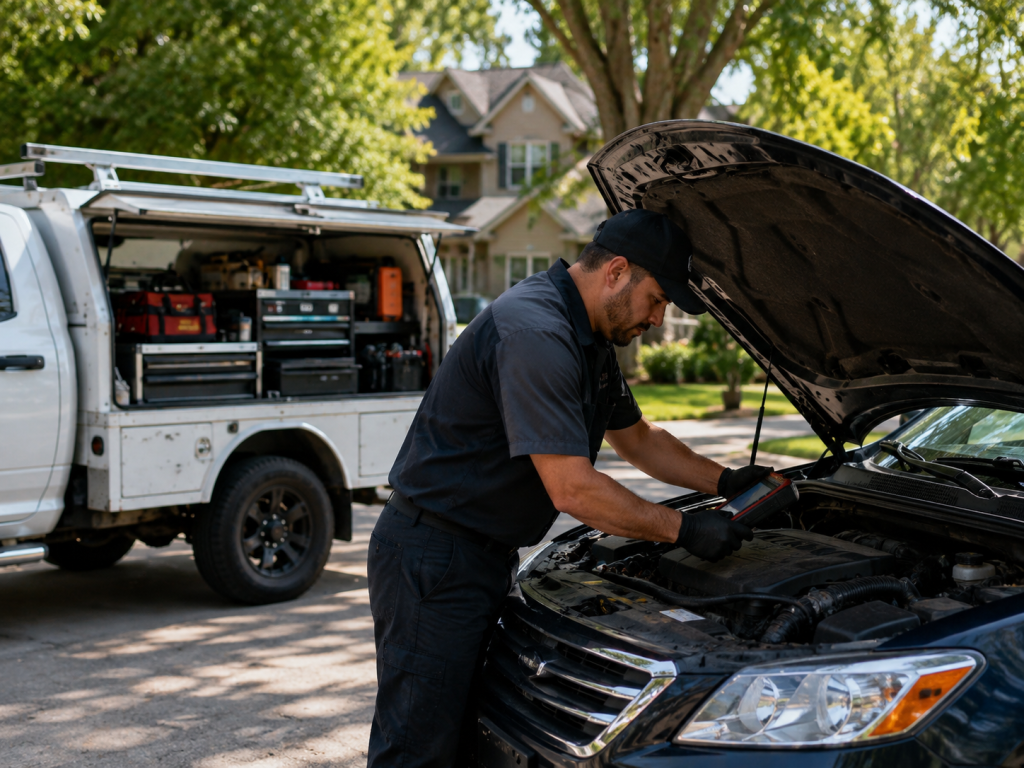
Given how much time high mileage commuters already spend in the car, adding a separate trip to a repair shop for routine inspections is not an appealing prospect. A mobile mechanic can come to your home or office anywhere in San Jose or the surrounding South Bay and handle these mileage based checkpoints without requiring additional time away from an already long day.
We covered the broader advantages of this approach in our article on why mobile mechanics are better than traditional auto shops in San Jose, which explains how convenience and flexible scheduling come together, particularly valuable for commuters trying to fit maintenance into an already demanding daily routine.
Match Your Maintenance Schedule To Your Actual Driving
Standard maintenance calendars were never really built with a sixty mile daily South Bay commute in mind. Thinking in terms of mileage checkpoints rather than simply following the standard time based schedule gives high mileage commuters a much better chance of catching wear before it becomes a breakdown, particularly on tires, brakes, and the timing and drivetrain components that mileage wears down fastest. It is a small shift in mindset, but one that pays off considerably for anyone putting more miles on their car each month than a typical driver covers in two or three.
If your commute has grown longer over the past year, or if it has simply been a while since your vehicle had an inspection that accounted for your actual mileage, visit our homepage to learn more about our services, or reach out through our contact us page to schedule a visit at your home or office at a time that fits your schedule.
A maintenance routine built around your actual mileage, rather than the calendar alone, is one of the simplest ways to keep your car dependable through another year of Bay Area commuting.