
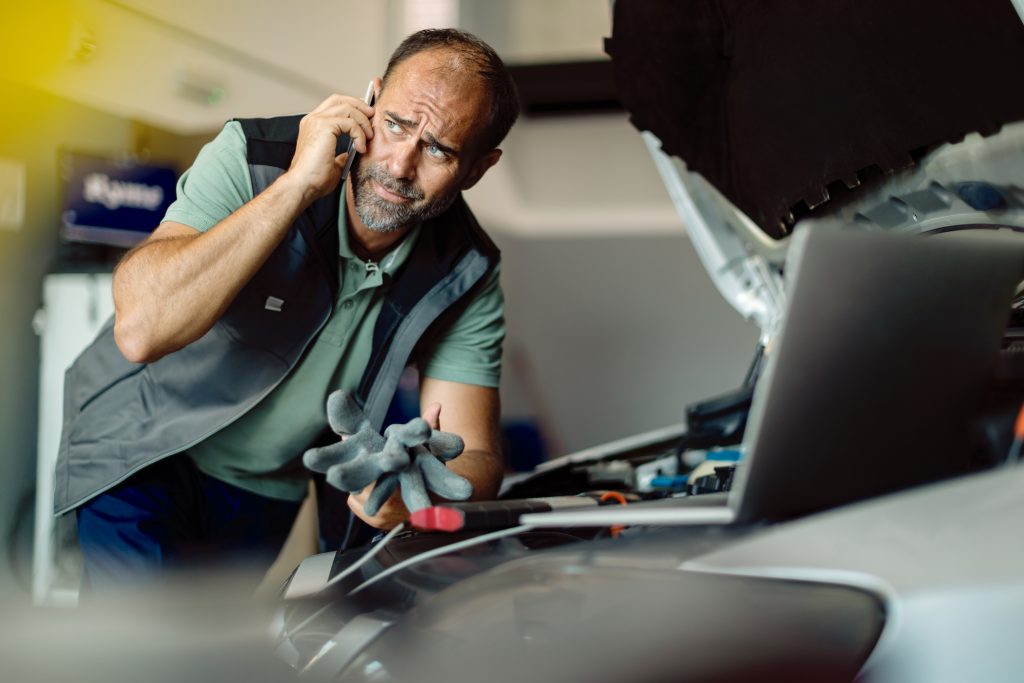
San Jose runs on schedules that don’t leave room for a car that won’t start. In Silicon Valley, early morning standups, cross-bay commutes, and back-to-back workdays make reliable transportation non-negotiable. Whether you’re stuck in your driveway in Willow Glen before a 7am meeting, stranded in a parking structure near downtown San Jose, sitting in a lot off I-680 in Berryessa, or stalled somewhere along US-101 with an engine that refuses to fire every minute your car isn’t moving is a minute your day is falling apart.
San Jose’s climate delivers a set of vehicle challenges that surprises drivers who assume Northern California means easy car ownership. Summers in the South Bay are hot and dry temperatures in the valley regularly push well past 90°F, rising even higher in Almaden Valley and the eastern foothills. Then the rainy season arrives between November and March, bringing weeks of heavy precipitation that floods low-lying streets, soaks electrical connections, and creates moisture related starting problems that develop quietly over time. That swing between dry summer heat and a wet winter season puts unique pressure on batteries, fuel systems, and electrical components throughout the year.
At Mobile Mechanic of San Jose, we come directly to you your home, your workplace campus, or wherever your car is parked across Silicon Valley diagnose the problem accurately, and fix it on the spot. No tow trucks, no waiting rooms, no losing half your workday. Here are the top 10 reasons your car won’t start in San Jose and what every South Bay driver should know.
1. Dead Battery
San Jose’s climate attacks car batteries from two directions across the year. The dry summer heat — which hits harder in inland areas like Evergreen, Almaden Valley, and Berryessa than in the more temperate communities closer to the Bay — accelerates the evaporation of electrolyte fluid inside battery cells and speeds up internal degradation. Then the wet season brings cold overnight temperatures that reduce the battery’s available cranking power just when damp mornings make starting harder. A battery weakened by a Silicon Valley summer often fails quietly during the first cold, wet stretch of December or January.
Common causes:
- Dry summer heat in San Jose’s inland neighborhoods accelerating internal battery breakdown
- Cold, wet winter mornings reducing battery cranking power at the worst time
- A battery older than 3 years that has quietly lost capacity through seasonal cycling
- Leaving accessories, phone chargers, or dashcams drawing power while the car sits overnight
- A failing alternator leaving the battery undercharged after every commute
What to do: Don’t wait for the battery to fail on a January morning when you’re already running late for a standup. Mobile Mechanic of San Jose arrives at your location with professional load testing equipment and replacement batteries ready. We test, diagnose, and replace at your home in Almaden Valley, your workplace campus in Santa Clara, or wherever your car is sitting — no tow, no shop visit required.
2. Rainy Season Moisture Damage to Electrical Systems
This is a San Jose-specific problem that most drivers don’t anticipate until it’s too late. Between November and March, the South Bay receives the bulk of its annual rainfall in concentrated wet periods that can drop several inches in a matter of days. Low-lying streets and parking areas across San Jose — particularly in areas near Coyote Creek, Guadalupe River, and other waterways that overflow during heavy rain years — can flood, allowing water to reach undercarriage electrical connectors, fuse boxes, and wiring harnesses. Even without standing water, weeks of heavy rain and high humidity during the wet season create persistent moisture conditions that work their way into electrical connectors and cause corrosion that develops slowly and silently.
Common causes:
- Flood water from heavy rain events reaching undercarriage electrical components and fuse boxes
- Persistent wet season moisture infiltrating wiring harness connectors and ground connections
- Post-rain corrosion developing gradually on electrical components over weeks or months
- Water intrusion into sensor connectors causing intermittent fault codes and eventual no-start
What to do: If your car developed starting issues during or after a heavy rain period, moisture-related electrical damage may be involved. Mobile Mechanic of San Jose diagnoses wet season electrical faults at your location — identifying corroded connections, damaged grounds, and moisture-compromised sensors before they cause bigger and more expensive problems.
3. Faulty Alternator
Silicon Valley commuters are hard on alternators in ways that aren’t immediately obvious. Long daily commutes on I-280, US-101, and I-880 mean the alternator runs for extended periods — which sounds fine, but stop-and-go at low engine speeds forces the alternator to work at reduced efficiency for long stretches. San Jose’s summer heat accelerates wear on internal alternator components, and the growing number of tech workers running multiple devices, dashcams, and high-draw accessories from their vehicles adds additional electrical load that a weakening alternator struggles to maintain.
Common signs:
- Headlights dimming at idle in slow traffic on I-680 or the 87 freeway
- A battery warning light on the dashboard during the commute
- Phone chargers, dashcams, or infotainment systems behaving erratically
What to do: Don’t wait for alternator failure on a morning commute on one of the Bay Area’s busiest corridors. Our mobile mechanics test your full charging system and replace failed alternators at your location anywhere across San Jose and the South Bay — no shop visit, no tow required.
4. Bad Starter Motor
San Jose’s wet season creates persistent moisture conditions that take a toll on starter motor connections and solenoid contacts. Weeks of rain and overnight humidity work into electrical components gradually, causing corrosion that increases resistance over time until the starter fails entirely. A single heavy click when you turn the key, a grinding noise at startup, or an engine that cranks sluggishly and reluctantly before finally catching are all signs that the starter is showing wear — and that wear accelerates in a climate with a defined wet season.
What to do: Starter replacement is a routine on-site repair for Mobile Mechanic of San Jose. We carry parts for the broad range of vehicles on South Bay roads — from high-mileage commuter cars to trucks to the hybrid vehicles common throughout Silicon Valley — and complete the repair at your location without a tow.
5. Empty Fuel Tank
A faulty fuel sending unit can display a quarter tank on your gauge while the car is genuinely empty. In San Jose, where highway on-ramps back up and surface street detours can turn a ten-minute drive into forty-five minutes, running lower on fuel than expected is a real risk. If the engine cranks normally but never fires, and the gauge is anywhere near low, eliminate this before assuming something more expensive.
What to do: Add a couple of gallons and try again. If your gauge is habitually inaccurate, have the fuel sending unit inspected before it strands you on I-280 heading toward Cupertino or leaves you stuck in a lot off Capitol Expressway.
6. Failing Fuel Pump or Clogged Fuel Filter
Your fuel pump maintains consistent pressure to move fuel from the tank to the engine. When it weakens or a clogged filter restricts flow, the engine cranks without getting the fuel it needs to start. San Jose’s summer heat puts additional stress on fuel pumps in vehicles regularly driven with a low tank — the pump uses fuel for cooling, and running near empty through a hot South Bay summer causes it to overheat and wear faster. The wet season’s cold temperatures then put the opposite demand on a pump that’s already been weakened by summer heat.
Common signs:
- Engine cranks normally but never fires
- Car starts briefly then immediately stalls
- Hesitation or stumbling under acceleration before the no-start condition develops
What to do: Fuel system diagnosis requires a fuel pressure test — not guesswork. Mobile Mechanic of San Jose arrives equipped with fuel pressure diagnostic tools to accurately identify whether the pump, filter, or pressure regulator is at fault at your location, without a shop visit.
7. Blown Fuse
Your vehicle uses fuses to protect every electrical circuit — including the starter relay and fuel pump circuit. One blown fuse in the wrong place can prevent the car from starting with no other visible warning. In San Jose, where wet season moisture can infiltrate fuse box contacts and relay sockets, fuse-related starting failures happen more often than in drier climates — and the corrosion that builds on fuse blade contacts can cause failures even when the fuse itself appears visually intact.
What to do: Locate your fuse boxes using your owner’s manual and check for any visibly burned or broken fuses. If fuses look fine but the car still won’t start, a relay or moisture-related wiring fault may be involved. Our mobile mechanics carry full diagnostic equipment and handle electrical checks at your location across San Jose and surrounding Silicon Valley communities.
8. Worn Spark Plugs or Faulty Ignition Coils
San Jose’s commuter traffic — particularly the daily backup on US-101 through downtown, the I-280 corridor toward Cupertino, and the I-880 approach to the Bay Bridge — means engines spend substantial time idling at low speeds, which accelerates spark plug fouling and uneven wear. When plugs are past their service interval, the engine cranks but won’t fire. The South Bay’s wet season humidity also promotes carbon tracking on ignition coil boots — moisture encourages electrical arcing along the boot surface, leading to misfires and complete coil failure, particularly on vehicles parked outdoors through San Jose’s rainy months.
What to do: Spark plugs are a standard maintenance item — typically replaced every 30,000 to 100,000 miles depending on type. If yours are overdue, this is one of the most cost-effective places to start. Mobile Mechanic of San Jose stocks common plugs and coils for same-day on-site replacement across San Jose and the greater Silicon Valley area.
9. Security System or Immobilizer Malfunction
Modern anti-theft immobilizers use a transponder chip in the key to communicate with the vehicle’s computer before allowing the engine to start. In San Jose, where vehicle break-ins and theft have been a persistent concern in certain neighborhoods, anti-theft systems are especially relied upon — and a malfunction that prevents your own car from starting is all the more frustrating. Wet season humidity can damage key fob electronics and corrode the receiver module inside the vehicle over time, causing communication failures that trigger a no-start. A flashing or steady security warning light during a start attempt is the clearest indicator.
What to do: Try your spare key. If the car starts, your primary key needs reprogramming. If neither works, the immobilizer module needs professional diagnosis. Our mobile mechanics handle this at your location anywhere across San Jose and the South Bay without requiring a tow.
10. Failing MAF Sensor or Crankshaft Position Sensor
San Jose’s wet season creates an environment where sensor connectors and wiring harness plugs are exposed to weeks of elevated moisture — particularly in vehicles that park outdoors through the rainy months. Moisture that works its way into sensor housings and connector plugs causes corrosion that develops gradually, creating intermittent faults before eventually causing complete sensor failure. The Mass Air Flow (MAF) sensor measures incoming air so the ECU can calculate the correct fuel mixture — especially important during cold, damp wet season mornings in San Jose. The crankshaft position sensor tracks engine position for ignition and injection timing. If either fails, the car won’t start and a check engine light will almost always be present.
What to do: These failures require a professional OBD2 diagnostic scan to read the stored fault codes accurately. Replacing sensors without reading codes is expensive guesswork. Mobile Mechanic of San Jose uses professional diagnostic equipment to pinpoint the exact failure at your location and replace it on the spot — same day.
Mobile Mechanic vs. Auto Shop: Why San Jose Drivers Are Choosing a Smarter Solution
In Silicon Valley, time is the most valuable resource — and spending it waiting for a tow truck and then sitting in a shop waiting room is a cost that most San Jose drivers simply can’t absorb. Most no-start repairs don’t require a shop at all. Here’s how Mobile Mechanic of San Jose compares:
| Mobile Mechanic of San Jose | Traditional Auto Shop | |
|---|---|---|
| Convenience | We come to your home, office, or campus | You arrange a tow across the Bay Area |
| Wait time | Same-day, often within 1–2 hours | Frequently 1–3 days |
| Towing cost | $0 | $125–$275+ across the South Bay |
| Rainy season | On-site diagnosis of wet season electrical faults | Standard shops may miss moisture-specific issues |
| Silicon Valley schedule | Same-day repairs that fit your workday | Days without a vehicle during a critical work week |
| Transparency | You watch every step of the repair | Work done out of sight |
Mobile Mechanic of San Jose serves the entire Silicon Valley and South Bay area — including Willow Glen, Almaden Valley, Evergreen, Berryessa, Campbell, Los Gatos, Los Altos, Santa Clara, Sunnyvale, Mountain View, Milpitas, Morgan Hill, Gilroy, Cupertino, and surrounding Santa Clara County communities.
Car Won’t Start in San Jose? Mobile Mechanic of San Jose Is on the Way
Don’t let a no-start situation cost you a day you can’t afford to lose. Our certified mobile mechanics come to your location across Silicon Valley, diagnose the problem accurately, and handle most no-start repairs the same day you call — on a schedule that works around yours.
Call or text Mobile Mechanic of San Jose today for same-day mobile mechanic service across San Jose and the South Bay. Available 7 days a week — because in Silicon Valley, downtime isn’t an option.