
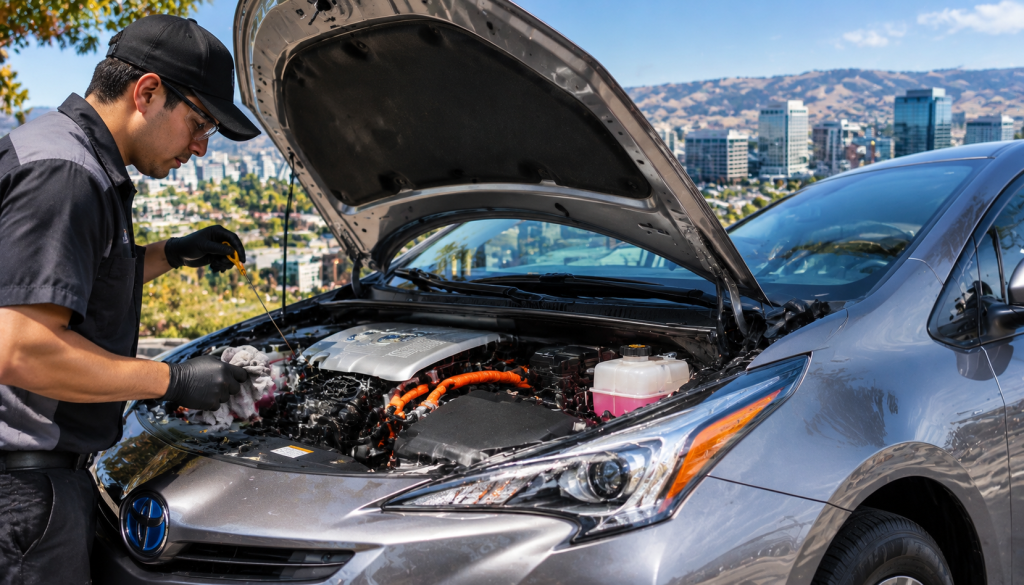
Hybrids are everywhere in San Jose. They are a natural fit for Silicon Valley commuters who sit in traffic on 101, 280 and 87, and for drivers who want to use less fuel without giving up the convenience of a gas tank. But a common assumption follows hybrids around: that they need little or no maintenance. It is true that some parts, like the brakes, can last longer on many hybrids. But a hybrid is still a car with an engine, fluids, tires, suspension and a lot of other systems that wear out, plus a high voltage battery and electric components that are not found on a conventional vehicle. This guide explains what hybrids still need serviced, which items are different, what to watch for and how to find the right help. If you are searching for hybrid car maintenance in San Jose, here is a practical overview.
How a Hybrid Is Different
A hybrid combines a gasoline engine with one or more electric motors and a battery pack. Depending on the design, the electric motor can assist the engine, drive the car on its own at low speeds or both. The system recovers energy while braking and stores it in the battery, which is called regenerative braking. The engine often shuts off when the car is stopped or coasting and restarts as needed. There are different types, including mild hybrids, full hybrids and plug in hybrids, and each works a little differently. Your owner’s manual explains how your specific vehicle is designed, and it lists the maintenance schedule the manufacturer recommends.
What a Hybrid Still Needs
A hybrid has all the basic wear items of a regular car. Do not skip these.
Engine oil and filter
The gasoline engine still needs clean oil. In some hybrids, the engine runs less than in a conventional car, but it still goes through cold starts and heat cycles, and oil still breaks down over time. Use the oil grade your owner’s manual specifies, and follow the recommended interval. Some hybrids call for specific low viscosity oils, so it matters to use the right one.
Tires
Tires wear on a hybrid just like any other car, and tire pressure matters for safety and efficiency. Many hybrids use tires designed to reduce rolling resistance, and the right size and type matter. Check pressure regularly using the number on the sticker in the driver’s door jamb or in your owner’s manual, and have the tires rotated and the alignment checked as recommended.
Brakes
Regenerative braking uses the electric motor to slow the car, which can reduce how much the friction brakes work in everyday driving. That can mean pads wear more slowly. However, the friction brakes still do their job in hard stops and at low speeds, and they can have problems of their own. Because they may be used less, they can develop rust, sticking calipers or uneven wear, especially in humid or coastal conditions. Brake fluid also ages whether or not the car is driven hard. Have the brakes inspected regularly, and do not assume they are fine just because the pads look thick.
Coolant systems
Hybrids often have more than one cooling system. In addition to the engine cooling system, many have a separate loop to cool the power electronics, the inverter or the battery. These systems may use specific coolants and have their own service intervals. Your owner’s manual lists what is required, so do not guess. Never open a coolant cap when the engine or system is hot.
Transmission and drive system fluids
Many hybrids use a special transmission design that combines the engine and motors. The fluid in these units may have specific requirements and replacement intervals. Following your manual matters, since the wrong fluid can damage expensive parts.
The 12 volt battery
Even though a hybrid has a large high voltage battery, it also has a regular 12 volt battery that powers the computers, lights, accessories and the system that starts the whole vehicle up. When the 12 volt battery fails, a hybrid can refuse to start or show strange warning lights, even if the high voltage battery is fine. This battery wears out like any other, so have it tested regularly, especially if you notice slow starts, warning lights or electrical glitches. The location and type of this battery can differ from a standard car, and replacing it may require specific procedures, so check your manual.
Belts, hoses and filters
Belts, hoses, the engine air filter and the cabin air filter all age and need inspection. The cabin filter in particular matters for air quality inside the car, and many hybrids have a separate cooling path for the battery that uses cabin air, so clogged filters or vents can be an issue. Check your owner’s manual for details.
Spark plugs and ignition parts
The gasoline engine still uses spark plugs or similar parts that wear out. Replacement intervals are listed in your manual.
Suspension and steering
Hybrids are often heavier than comparable gas cars because of the battery and motors, which means the suspension and tires work hard. Worn shocks, struts and bushings affect ride, handling and safety just as on any car.
Air conditioning
Many hybrids use an electric compressor for the air conditioning, which allows cooling even when the engine is off. These systems still need to be inspected for leaks and cooling performance, and servicing them may require special procedures and fluids. A weak AC is worth having checked.
What Is Different: The High Voltage System
The parts that make a hybrid unique, such as the high voltage battery, the inverter, the motors and the thick orange cables that connect them, are a different story. This system carries high voltage that can be dangerous. It should only be inspected and serviced by technicians who have the right training, tools and safety equipment.
- Never touch or tamper with high voltage cables or components. They are often marked with orange insulation or warning labels.
- Do not attempt DIY repairs on the high voltage system.
- Follow your owner’s manual for jump starting, towing and emergency procedures, since hybrids often have specific instructions. Some should not be jump started the same way as a conventional car, and some should not be towed with the drive wheels on the ground.
- Be cautious after a crash or flood. Damage to the high voltage system can be hazardous.
The High Voltage Battery
The hybrid battery is often the biggest concern for owners. A few facts help put it in perspective:
- It is designed to last. Manufacturers design hybrid batteries for long service, and many are covered by long warranties. Check your warranty documents for the terms that apply to your vehicle.
- It does wear over time. Age, heat and use gradually reduce capacity, and heat is one of the biggest factors.
- Cooling matters. Many hybrids cool the battery with air drawn from the cabin. Blocked vents, a clogged filter or items stuffed in front of vents can lead to overheating.
- Warning signs. Reduced fuel economy, the engine running more than it used to, a warning light, unusual noises from the cooling fan, poor acceleration or erratic charge level readings can all point to trouble. Many of these also have other causes.
- Testing helps. A technician with the right equipment can read the system’s data to assess the battery’s condition.
If a warning light related to the hybrid system comes on, check your owner’s manual, and have it diagnosed by a qualified technician.
Warning Signs to Watch For
- A hybrid system or battery warning light.
- A check engine light, especially if flashing, which is urgent.
- A sudden drop in fuel economy.
- The engine running more often or louder than usual.
- Poor acceleration or a loss of power.
- A vehicle that will not start or go into ready mode.
- Odd noises from the battery cooling fan or from underneath.
- Braking that feels different, such as a changed pedal feel, grinding or a pull to one side.
- Strange smells, especially burning or chemical smells. If you notice smoke or a strong odor, get away from the car and call for help.
Maintenance Habits That Help
- Follow the schedule in your owner’s manual, which may differ from a conventional car.
- Do not skip oil changes or fluid service just because the engine runs less.
- Have the 12 volt battery tested regularly.
- Keep the battery cooling vents and filters clear. Do not block vents with cargo or items on the seat, and replace the cabin filter as recommended.
- Park in the shade or a garage when you can, since heat is hard on batteries.
- Drive the car regularly. Long periods of sitting are hard on any battery.
- Keep tires properly inflated.
- Have the brakes inspected, even if the pads seem to last a long time.
- Use a technician who is experienced with hybrids.
Long Commutes and Hybrids
Many Bay Area hybrid owners put plenty of miles on their cars, and long commutes affect maintenance. Stop and go traffic means a lot of braking and a hybrid system working hard, while highway driving puts more load on the engine and tires. If you drive a lot, our post on long commutes in the Bay Area and when to get a mobile inspection explains why regular inspections matter.
Hybrid or Electric? What Is the Difference?
It is easy to mix the two, but they are different vehicles. A hybrid still has a gasoline engine and needs the maintenance that goes with it, while a fully electric vehicle has no engine and a different set of needs. If you are curious about the electric side, our electric car FAQ for San Jose answers many common questions.
How a Mobile Mechanic Can Help
A mobile mechanic can handle many of the routine tasks on a hybrid, such as inspecting tires and brakes, checking fluids, testing the 12 volt battery, changing oil and looking over belts, hoses and filters, at your home or workplace. That can be a real convenience in a busy city. Work on the high voltage system, certain hybrid specific services and some diagnostics and repairs need specialized equipment and training, and they may need a shop or a technician with the right qualifications. A good mobile technician will be honest about what can be done at your location and what cannot, and will point you in the right direction.
Quick Hybrid Maintenance Checklist
- Follow your owner’s manual schedule.
- Change the oil and filter as recommended.
- Check tire pressure, tread and alignment.
- Have the brakes inspected regularly.
- Test the 12 volt battery.
- Service coolant systems and transmission fluids as listed in your manual.
- Keep battery cooling vents and cabin filters clear.
- Do not touch high voltage components.
- Pay attention to warning lights and changes in performance.
A hybrid can be a dependable, efficient car for many years when it is maintained properly. If you would like help with routine service for your hybrid, visit our homepage to learn more, or contact us to schedule a visit.